
We can all certainly agree that our young children’s bedroom should be a safe, functional, and cozy space where they can sleep, rest, play, and learn. We also require it to be a space that grows along with its little owner.

When designing a children’s bedroom, we always take into account several requirements that we believe must be met.
These are our tips:
- Safety: it is essential that the bedroom is a safe place for the child, free from hazards such as easily accessible sockets, windows that can be opened easily, sharp or glass objects, incorrectly anchored furniture, etc.
- Storage: when planning the room layout, we must ensure sufficient storage space for books, toys, and clothes, utilizing wardrobes, shelves, chest of drawers, etc. This will also help us keep the space organized and clean and teach them to tidy up when they finish playing.
- Furniture: it is important to choose a comfortable bed that accompanies the child as they grow, a desk and chair with adjustable height, bookshelves, etc. We usually opt for bespoke furniture because it ensures a better use of space.
- Lighting: we must choose appropriate lighting for the room, including general lighting, task lighting for studying, and another light by the bed. It is also convenient to have lighting in the wardrobe area. We always recommend a warm light that conveys comfort.
- Study: even if the child is not yet of school age, it is advisable to provide a designated study area in the bedroom. They will need it for homework and studying sooner than you might imagine. It is important that it also has storage capacity for school supplies.

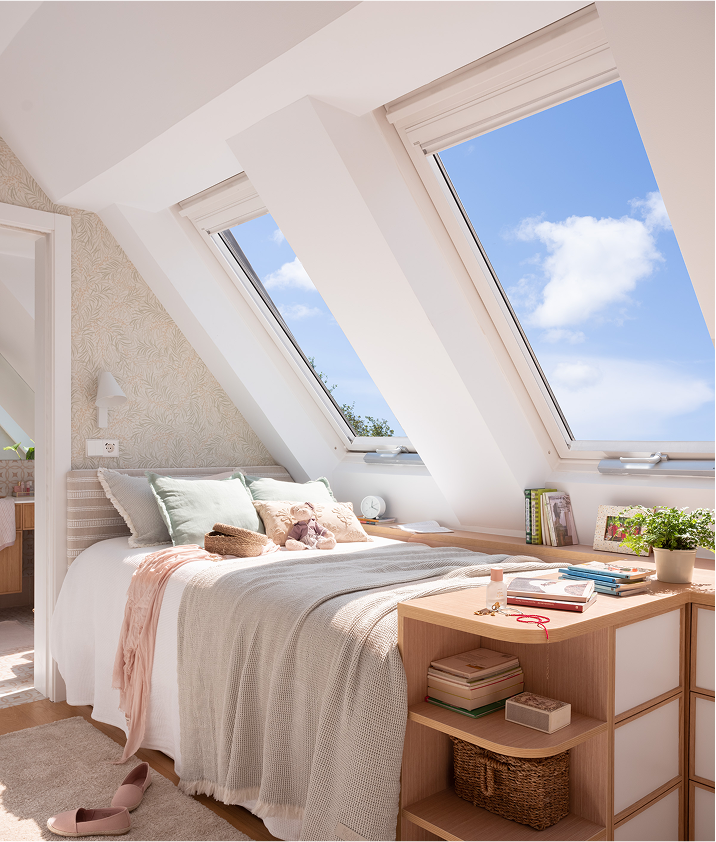

- Play area: if space permits, it is recommended to reserve a small area of the bedroom dedicated to play. If this is not possible, we could look for another place in the house with enough space to play safely.

- Decoration: to achieve a cozy bedroom, we need to complete it with textiles (wallpapers, curtains, rugs, bedspreads, cushions…) and colors that complement the chosen style. This could involve choosing a theme that reflects the child’s personality and tastes, as well as those of the parents. It could be a themed room, for example, inspired by nature, a sport, a movie, or a book… to stimulate their creativity and imagination.
In any case, we always recommend calm colors because, ultimately, the bedroom should primarily be a place to rest.
One last tip… if you want the room to grow with your child, an excellent option to save time and money on future renovations is to use quality furniture in white tones or light wood, with simple lines. You can even choose wallpaper in neutral colors and motifs that are not “too” childish, featuring a timeless design, as with the curtains and the rest of the textiles.

So, there you have it—with a little creativity, planning, and attention, you can create a space that is pleasant, fun, and suitable for your child’s growth and development. A place where they feel comfortable, relaxed, and happy. Their sanctuary.


Designing the spaces of a home well also means thinking about how they will accompany each stage of those who inhabit it.